
Written by: Shannon Vann, IBCLC
Selecting a wearable breast pump is about much more than choosing a popular brand or finding the smallest, quietest model. Before I recommend a pump, I want to understand the parent’s current pumping routine, what they hope to accomplish, and what matters most to them.
Are they returning to work and hoping to pump discreetly between meetings? Do they need to pump while caring for other children, traveling, or managing a busy household? Are they looking for a primary pump they can use throughout the day, or do they simply want a more convenient option for occasional outings? These answers help narrow down the choices.
What I Consider Before Recommending a Pump
I also consider their experience with pumping. A parent who already has an established pumping routine may have a good sense of what they like and dislike. Someone who is new to pumping may need more guidance on flange fit, suction settings, milk expression, and the practical differences between pump designs.
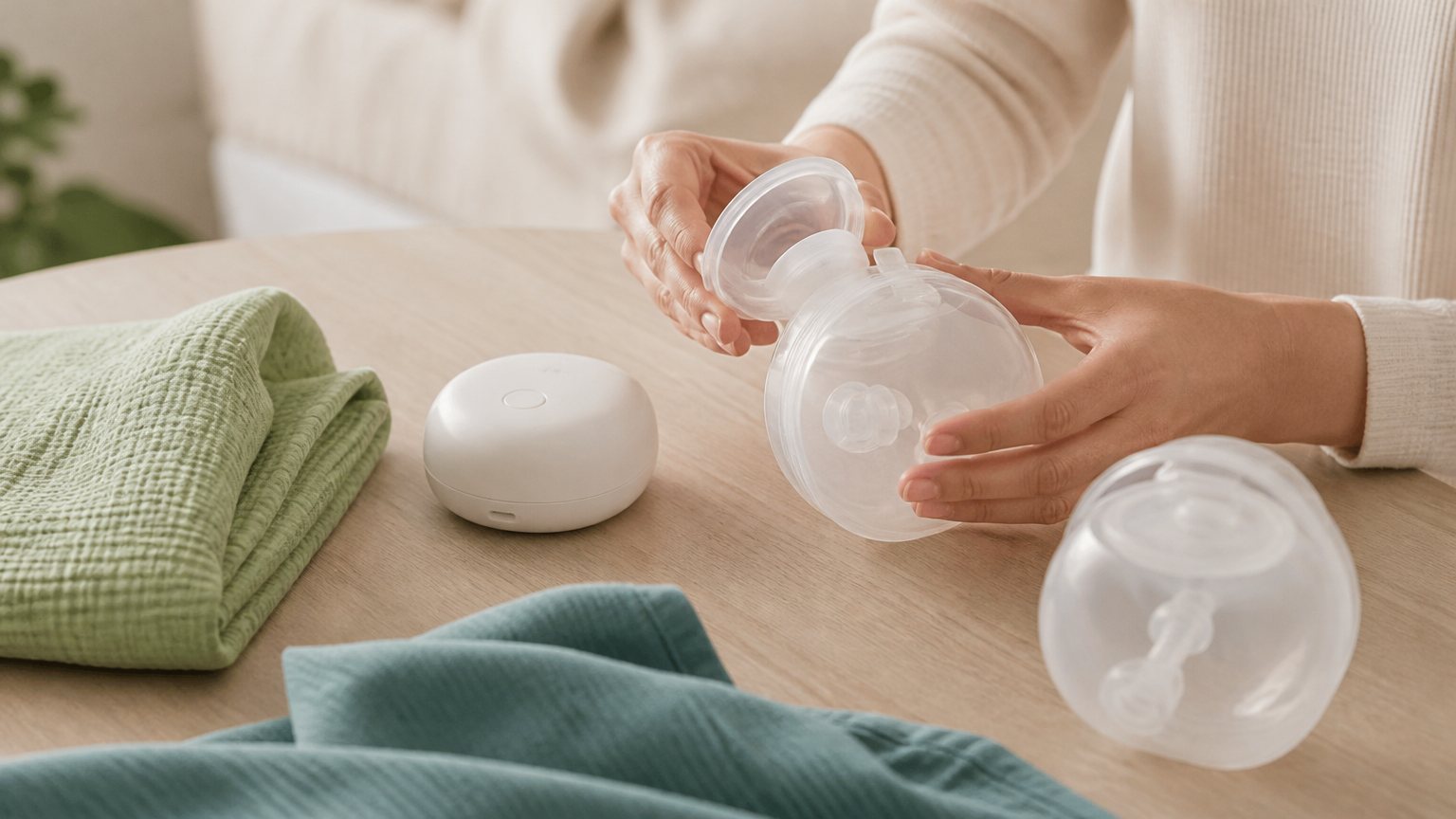
Not all wearable and portable pumps work the same way. Some are self-contained cups with a motor built into the unit. Others use a separate motor connected to wearable collection cups, offering a different balance of portability, weight, controls, and flexibility. Some have straightforward manual controls, while others rely on an app. I also consider the number of parts, how easy the pump is to assemble and clean, battery life, noise, and how comfortably the unit fits inside a bra.
Why Anatomy and Breast Shape Matter
The parent’s anatomy and breast shape matter, too. A pump that works beautifully for one person may be uncomfortable or ineffective for another. Flange size, tunnel length, insert material, breast tissue, and nipple movement during pumping can all influence how a pump feels and performs. This is why I prefer to evaluate the actual pump whenever possible rather than relying only on measurements or product specifications alone.
How I Assess Fit With a Traditional Flange
I typically begin by assessing the parent’s fit with a traditional hard-plastic flange. This gives us a useful starting point for understanding their anatomy and current comfort. However, I don’t automatically assume that the same size will work in a wearable pump. Different flange designs and materials can change the fit, so we reassess once the wearable is in place.
Milk Production and the Pump’s Role in Your Feeding Plan
I also ask about milk production and the role the pump will play in the parent’s feeding plan. Someone who depends on pumping for most or all of their baby’s milk has different considerations from someone who primarily breastfeeds and wants an occasional convenient pumping option. In either case, comfort and convenience are important, but we also need to consider effective milk removal and whether the pump can support the parent’s ongoing milk production.
Selecting a Pump to Try
Once we’ve discussed these factors, I select a pump to try based on the parent’s individual needs. Sometimes we find a promising match right away. Other times, comparing a second option helps clarify which design, fit, and features work best.
My goal isn’t to find the most expensive pump or the one with the most features. It’s to identify a pump that the parent can use comfortably, confidently, and consistently—and that supports their individual feeding goals.